

Sublingual vs Chewable 7-OH — How dissolving oral strips and chewable tablets differ in absorption, onset, discretion, taste, and ideal use — with product picks.
If you arrived by searching for “sublingual vs chewable 7-oh”, the short version is this: How dissolving oral strips and chewable tablets differ in absorption, onset, discretion, taste, and ideal use — with product picks. The rest of this guide explains why, with the numbers and safety rules printed plainly.
Key takeaways
- Strips dissolve on the tongue; chews are, well, chewed.
- Both offer fixed milligrams; neither rewards rushing.
- Pick the format that matches where and how you actually use it.
What “sublingual-style” means
Oral films like the Green Apple Mint strips dissolve in the mouth rather than being swallowed whole or chewed, which lets absorption begin at the oral mucosa. Products sold as “sublingual” in this category are really buccal/oral dissolving films for practical purposes; no consumer can measure exact absorption routing, so treat the labeled serving as the unit.
Side-by-side comparison
Onset: strips tend to lead because dissolution starts immediately; chews follow once broken down. Precise personal timing still depends on food (guide).Discretion: strips are flat foil sleeves that disappear into a wallet or phone case; tins and single pouches are more visible and can rattle.Taste: one mint-apple profile for strips vs nine flavor options across chews (flavor guide).Serving control: strips are individual 10mg films; tins require counting a tablet; singles require no decision at all.Strength ceiling: strips cap at 10mg per film, which makes them inherently starter-friendly; chews run up to the 80mg Double Stacks.Who should pick which
New users, travelers, and discreet-everything buyers: strips. Flavor variety and stocked servings: the 7mg/20mg tins. Experienced users who want one maximum-strength piece: the 80mg singles. Many customers keep both: tins at home, strips in a bag.
Using strips correctly
Place one film on the tongue and let it fully dissolve; don’t swallow it whole like a pill or stack films to mimic a stronger product. Keep sleeves sealed against steam and heat (storage). As always: no driving (why), no alcohol (why), 21+ only.
Frequently asked questions about Sublingual vs Chewable 7-OH
Quick answer: what matters most about Sublingual vs Chewable 7-OH?
Strips dissolve on the tongue; chews are, well, chewed. Both offer fixed milligrams; neither rewards rushing. The full reasoning is above; beginners can also start with the beginner’s guide and the strength chart.
Does the advice change between 7mg, 20mg, 70mg and 80mg for Sublingual vs Chewable 7-OH?
The strength number governs serving size and who should use the product; the principles behind Sublingual vs Chewable 7-OH stay constant. Start with the 7mg tin or the 10mg strips; 70mg singles and the 80mg Double Stacks are for experienced adults only.
Where do I verify Sublingual vs Chewable 7-OH before ordering?
Check the lab testing program, the certificate walkthrough, the FAQs, or message support — every Ultra Seven lot is third-party tested and shipped discreetly to adults 21+ under the shipping policy.
Does the label tell me everything about Sublingual vs Chewable 7-OH?
The label states strength per piece, count, flavor, and lot number — the objective facts behind Sublingual vs Chewable 7-OH. What it cannot tell you is your personal response, which is why first-time users begin at 7mg or 10mg and wait a full onset cycle: see the onset guide and the label walkthrough.
Is Sublingual vs Chewable 7-OH the same across tins, singles, and strips?
The format changes how a piece is carried and consumed, not the rules behind Sublingual vs Chewable 7-OH: a sealed tin, a single, and a film all carry fixed milligrams, and the format comparison maps the differences. Strength lives in the number, never in the flavor.
The bottom line on Sublingual vs Chewable 7-OH
If you remember one thing from this guide to sublingual vs chewable 7-oh, make it this: Strips dissolve on the tongue; chews are, well, chewed. Applying that one point removes most mistakes readers make with sublingual vs chewable 7-oh. Then pick the tier that matches your experience in the Ultra Seven shop, compare the details with the related guide, and follow the responsible-use rules.
Official & educational resources
Related guides
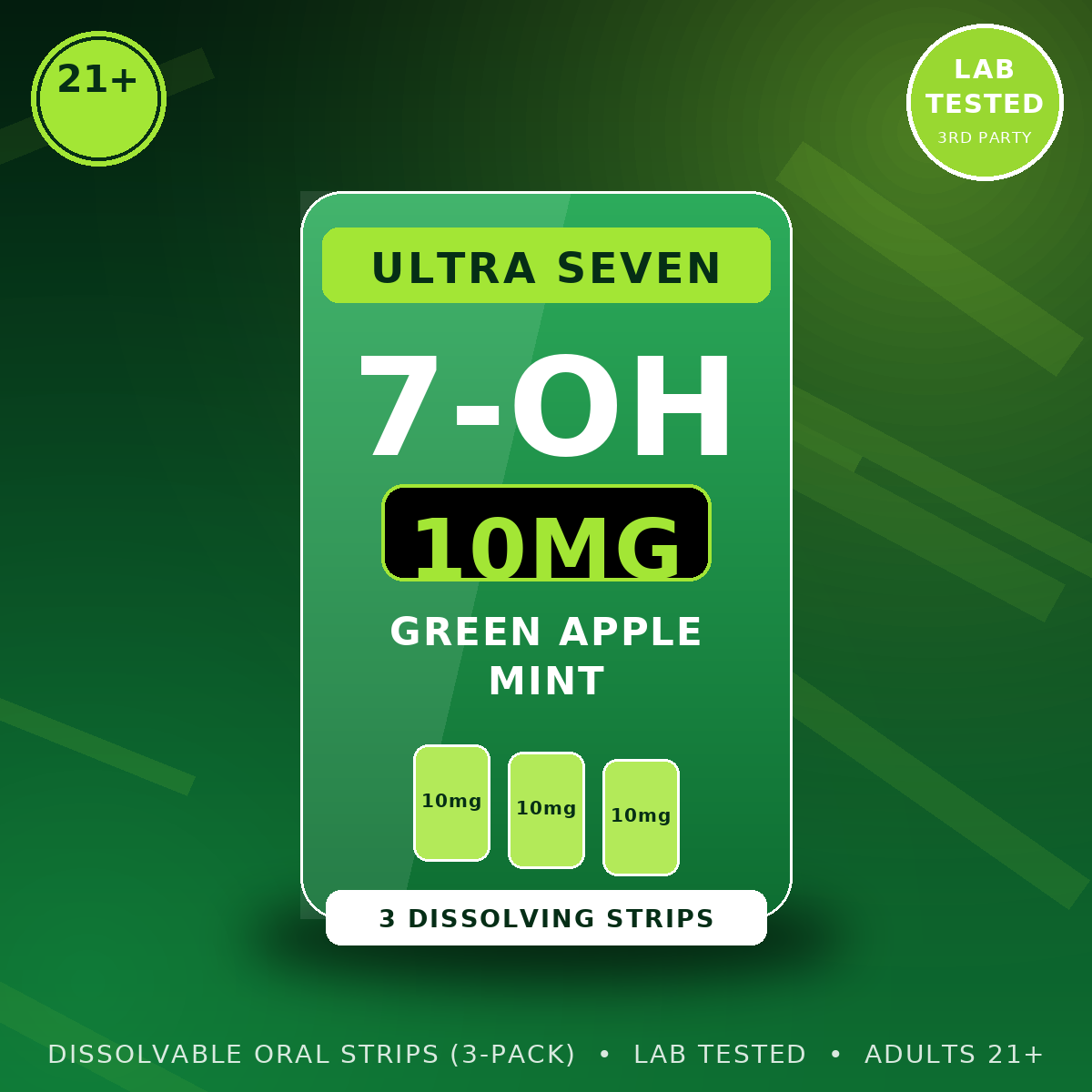 Ultra Seven 30mg 7-OH Strips Green Apple Mint (3 Strips)$6.85
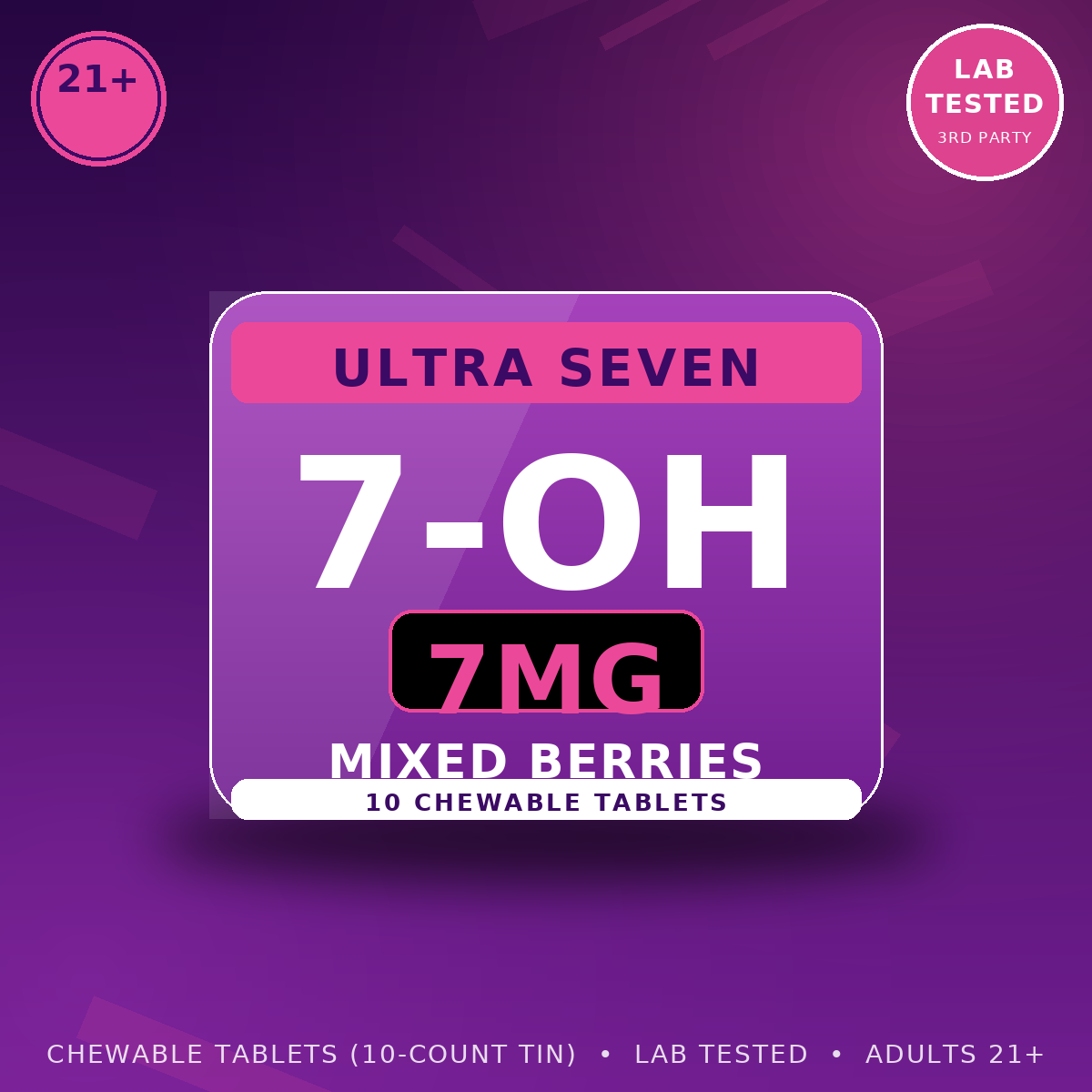 Ultra Seven 7mg 7-OH Mixed Berries Chewable Tablets (10 Count)$13.25
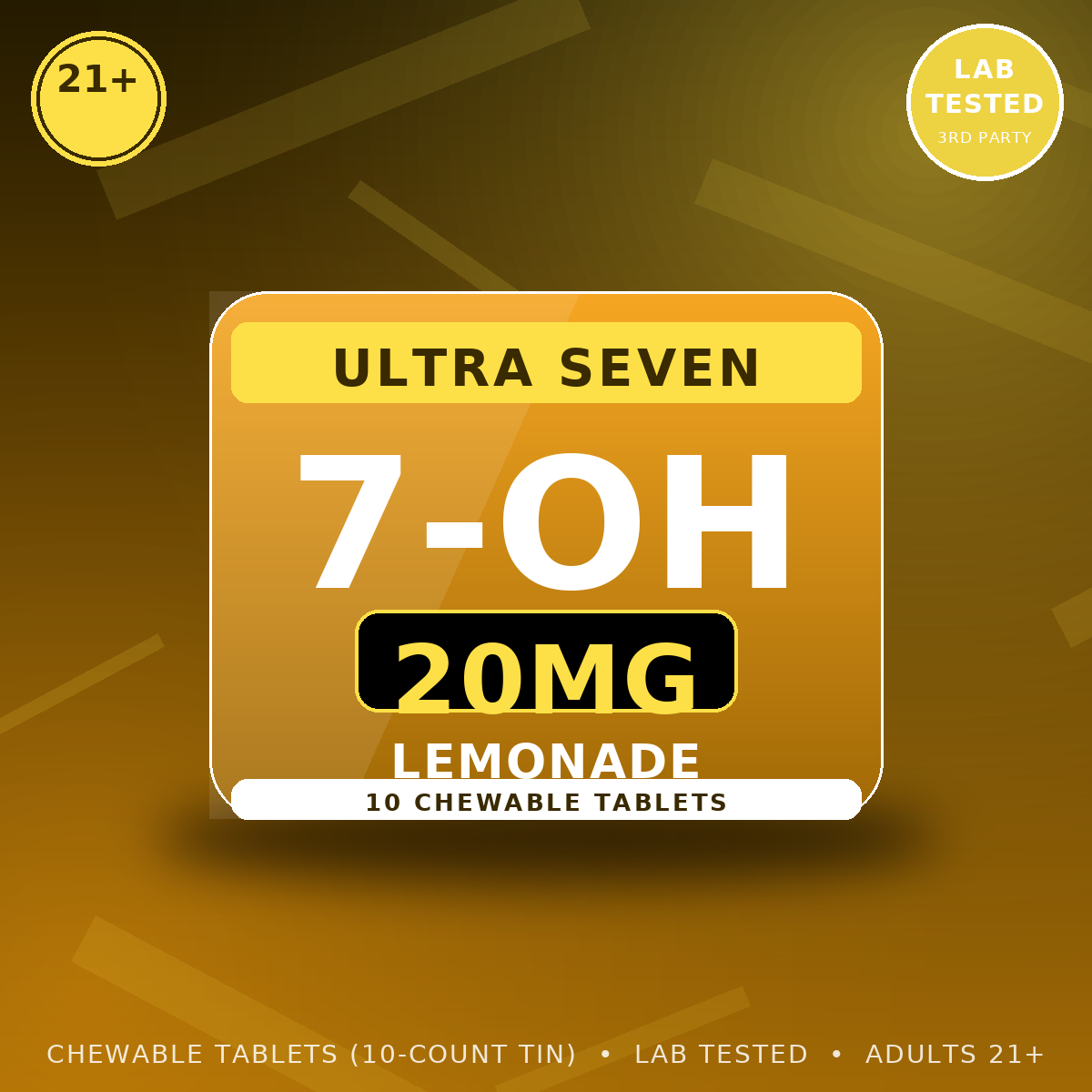 Ultra Seven 20mg 7-OH Lemonade Chewable Tablets (10 Count)$23.95
Ready to choose your strength?
All Ultra Seven chewables and strips are third-party lab tested, precisely labeled, and shipped in plain packaging to adults 21+.
SHOP ULTRA SEVENSEE THE STRENGTH CHARTEducational content only. These statements have not been evaluated by the Food and Drug Administration. Products are not intended to diagnose, treat, cure, or prevent any disease. Adults 21+ only. Do not use with alcohol or sedating medications, and do not drive after use. Laws vary by state and change frequently — verify current rules at your address via our shipping & legality map. In an emergency call 911 or U.S. Poison Control at 1-800-222-1222.