
7-OH Drug Interactions — Which medications and substances interact dangerously with 7-hydroxymitragynine, including alcohol, benzodiazepines, opioids, antidepressants, and sleep aids.
If you arrived by searching for “7-oh drug interactions”, the short version is this: Which medications and substances interact dangerously with 7-hydroxymitragynine, including alcohol, benzodiazepines, opioids, antidepressants, and sleep aids. The rest of this guide explains why, with the numbers and safety rules printed plainly.
Key takeaways
- Alcohol, benzodiazepines, opioids, and sleeping aids are hard no-combines.
- Sedating antihistamines and muscle relaxants count as CNS depressants too.
- If you take daily medication, ask your prescriber or pharmacist before ordering.
Why interactions happen
7-OH acts on the brain’s mu-opioid receptors and can produce sedation, slowed breathing, and reduced heart rate at high servings. Stack it with anything else that depresses the central nervous system (CNS) and those effects add together — that is the mechanism behind nearly every serious 7-OH emergency.
This guide is educational, not medical advice; the FDA has not approved these products for any medical use.
Never combine
Alcohol — detailed in 7-OH and alcohol; the combination sharply raises over-sedation and respiratory-depression risk.Opioids and opioid medicines (oxycodone, hydrocodone, codeine, tramadol, fentanyl products, morphine).Benzodiazepines and sedative/anxiety medicines (alprazolam/Xanax, lorazepam/Ativan, diazepam/Valium, clonazepam/Klonopin).Sleeping pills and Z-drugs (zolpidem/Ambien, eszopiclone), barbiturates, and sedating muscle relaxants (carisoprodol, cyclobenzaprine).Sedating antihistamines at high doses (diphenhydramine/Benadryl, doxylamine) and cannabis products high in sedating effects.Ask a clinician first
Certain antidepressants (especially sedating TCAs and combinations affecting serotonin), anticonvulsants, antipsychotics, blood-pressure and heart-rhythm medications, and anything that affects liver metabolism can change both safety and response. If you are prescribed any daily medicine, show your prescriber or pharmacist the product label — that is faster and safer than internet guessing.
The same applies to liver or kidney disease, respiratory conditions including asthma and sleep apnea, cardiac conditions, a history of substance use disorder, or pregnancy/breastfeeding.
Practical rules
No driving or machinery after use — see driving guidance. Keep a naloxone kit in any household that contains opioids or opioid-type products: naloxone explained. Know the emergency signs in overconsumption warning signs and save Poison Control, 1-800-222-1222.
Choose lab-tested, exactly-labeled products — unknown products could contain other compounds entirely. Start at 7mg and follow the 12 safety rules.
Frequently asked questions about 7-OH Drug Interactions
Quick answer: what matters most about 7-OH Drug Interactions?
Alcohol, benzodiazepines, opioids, and sleeping aids are hard no-combines. Sedating antihistamines and muscle relaxants count as CNS depressants too. The full reasoning is above; beginners can also start with the beginner’s guide and the strength chart.
Does the advice change between 7mg, 20mg, 70mg and 80mg for 7-OH Drug Interactions?
The strength number governs serving size and who should use the product; the principles behind 7-OH Drug Interactions stay constant. Start with the 7mg tin or the 10mg strips; 70mg singles and the 80mg Double Stacks are for experienced adults only.
Where do I verify 7-OH Drug Interactions before ordering?
Check the lab testing program, the certificate walkthrough, the FAQs, or message support — every Ultra Seven lot is third-party tested and shipped discreetly to adults 21+ under the shipping policy.
Does 7-OH Drug Interactions change the basic 21+ session rules?
No. The rules stay identical — one labeled serving, no alcohol or sedatives, no driving, secure storage away from children and pets. 7-OH Drug Interactions changes the details and emphasis, not the foundation: review the full safety rules and the interaction list.
Who should avoid these products when it comes to 7-OH Drug Interactions?
Anyone under 21, anyone pregnant or nursing, anyone taking opioids, benzodiazepines, sleep medication, or drinking alcohol, and anyone with substance-use history or certain medical conditions. Read the medications guide; uncertainty is a reason to talk to a doctor, not to order.
What if I am still unsure about 7-OH Drug Interactions?
Do not guess. Ask your prescriber or pharmacist, message our team for label and lab documentation, and save Poison Control (1-800-222-1222). The FAQ hub covers 7-OH Drug Interactions and fifty related topics.
The bottom line on 7-OH Drug Interactions
If you remember one thing from this guide to 7-oh drug interactions, make it this: Alcohol, benzodiazepines, opioids, and sleeping aids are hard no-combines. Applying that one point removes most mistakes readers make with 7-oh drug interactions. Then pick the tier that matches your experience in the Ultra Seven shop, compare the details with the related guide, and follow the responsible-use rules.
Official & educational resources
Related guides
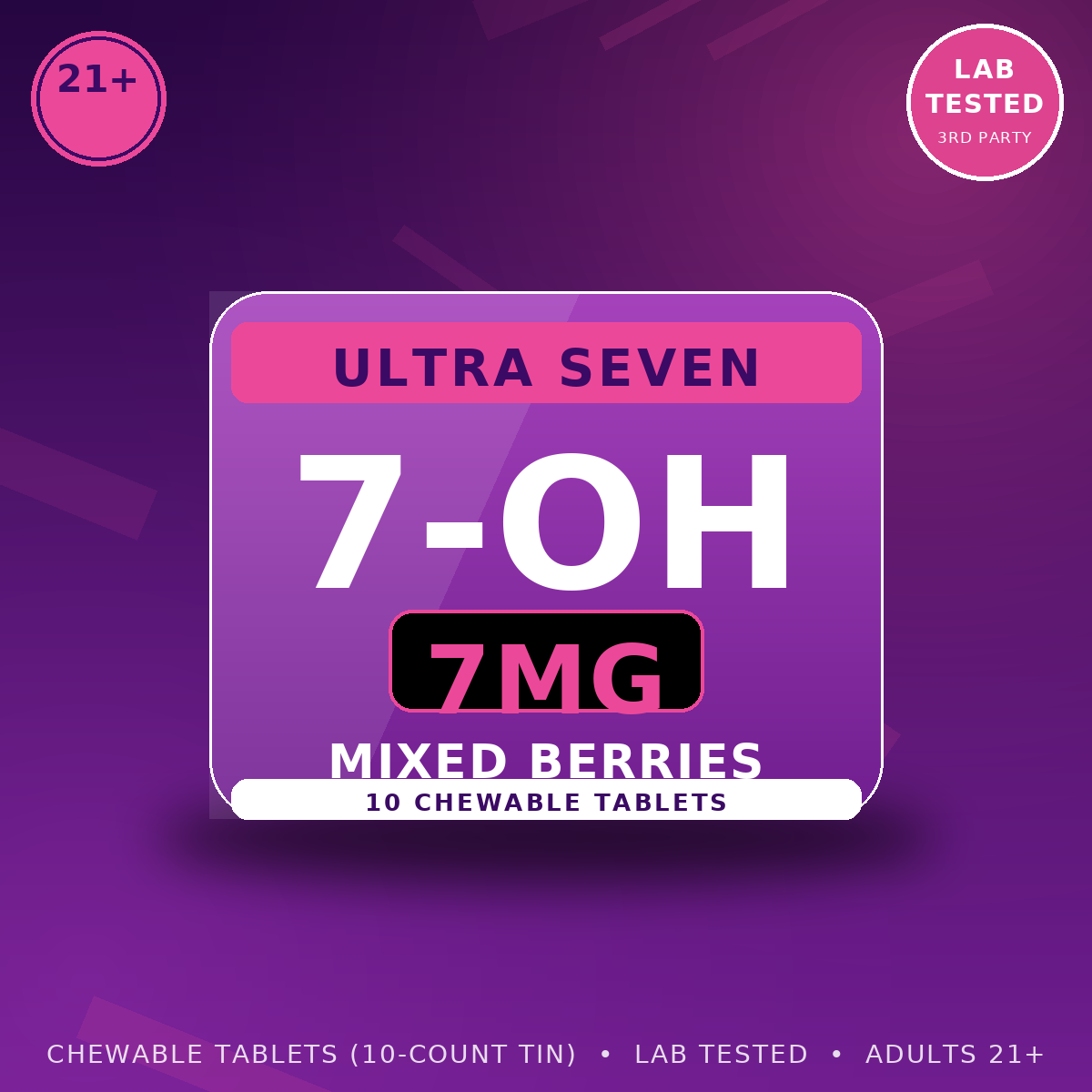 Ultra Seven 7mg 7-OH Mixed Berries Chewable Tablets (10 Count)$13.25
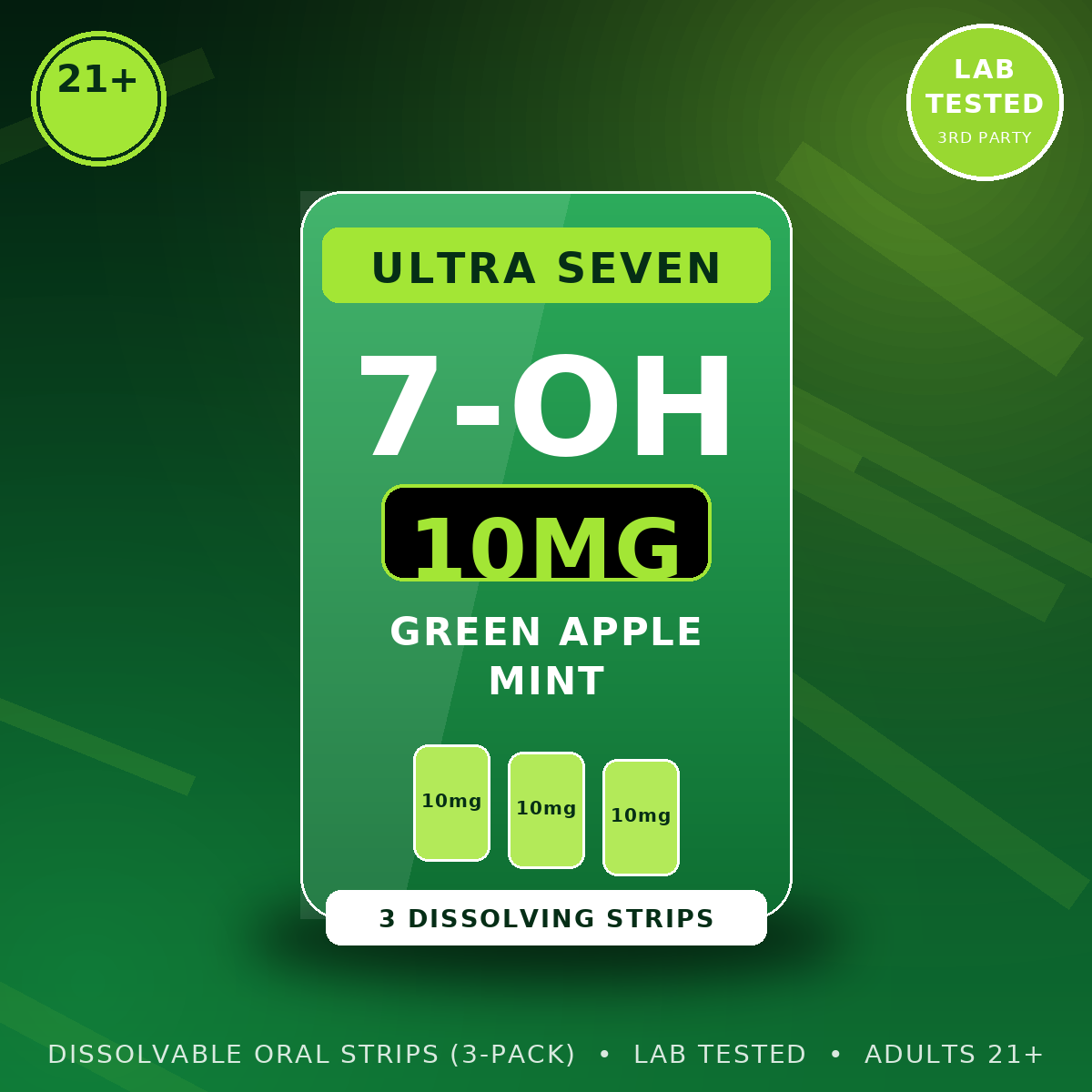 Ultra Seven 30mg 7-OH Strips Green Apple Mint (3 Strips)$6.85
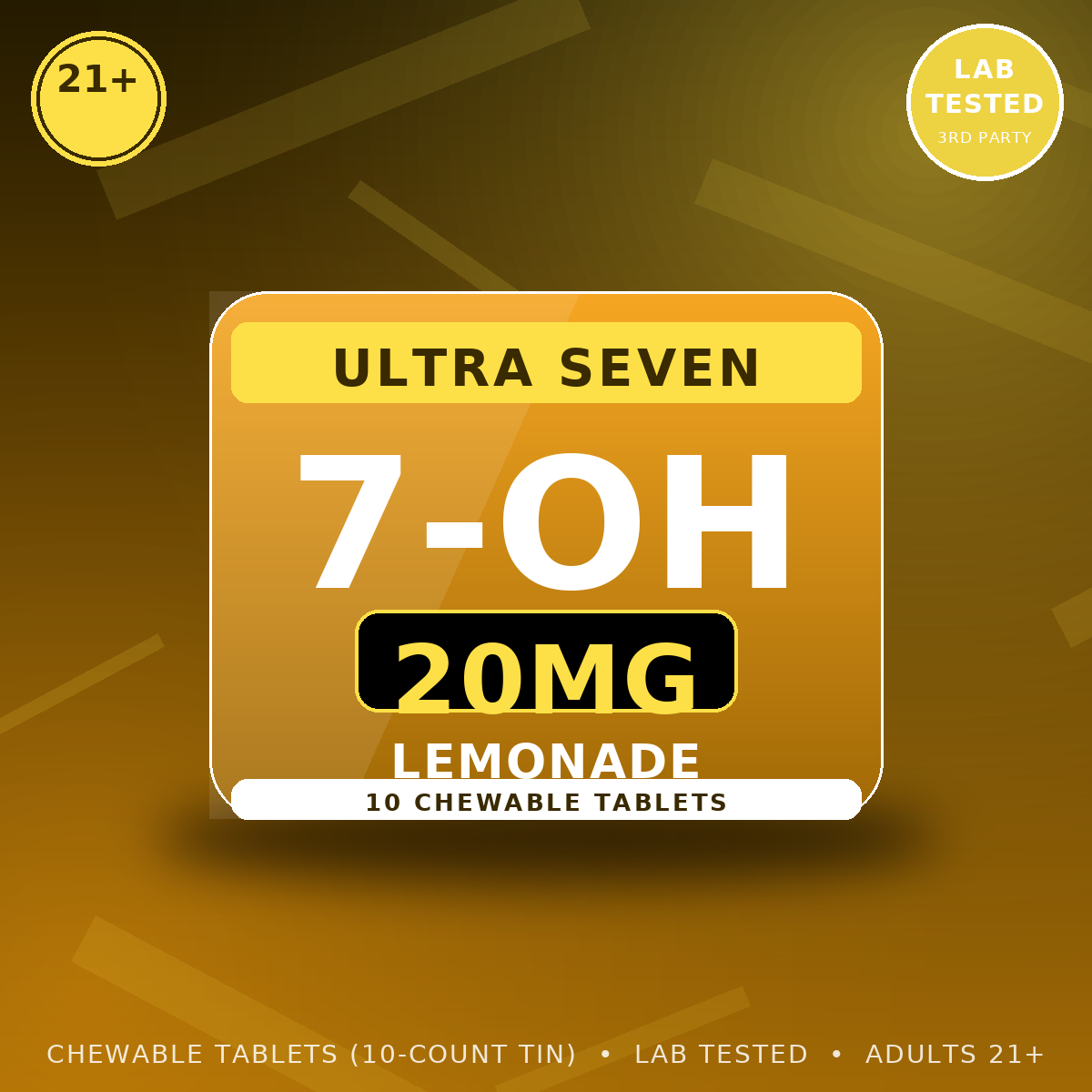 Ultra Seven 20mg 7-OH Lemonade Chewable Tablets (10 Count)$23.95
Ready to choose your strength?
All Ultra Seven chewables and strips are third-party lab tested, precisely labeled, and shipped in plain packaging to adults 21+.
SHOP ULTRA SEVENSEE THE STRENGTH CHARTEducational content only. These statements have not been evaluated by the Food and Drug Administration. Products are not intended to diagnose, treat, cure, or prevent any disease. Adults 21+ only. Do not use with alcohol or sedating medications, and do not drive after use. Laws vary by state and change frequently — verify current rules at your address via our shipping & legality map. In an emergency call 911 or U.S. Poison Control at 1-800-222-1222.